When your air conditioner starts making unfamiliar noises, runs longer than it used to, or fails to keep your house comfortable, you face a common dilemma: repair or replace. In Tucson, with summer temperatures that regularly climb well into triple digits, that decision carries more weight than in milder climates. A failing system affects comfort, energy bills, indoor air quality, and even roof and envelope load during extreme heat. This article distills practical guidance from field experience, giving homeowners clear, defensible criteria to decide when to call for AC repair in Tucson and when a full AC installation in Tucson makes better long-term sense.
Why the Tucson climate changes the math
Tucson homes live under prolonged cooling demand. A unit that might limp along in a temperate region will often fail sooner here because it cycles and runs almost daily for months. That increases wear on electrical components, compressor stress, and refrigerant leaks that grow the longer they go untreated. Labor availability and part lead times in a regional market also influence whether a quick repair will genuinely restore reliability or merely delay an inevitable replacement. When you search HVAC company near me or HVAC Service Near Me, expect technicians to assess both immediate symptoms and the timeline of service needs specific to our desert climate.
Common failure modes and what they typically mean
Most HVAC problems fall into a few categories, and each has different implications for repair versus replacement.
Compressor failure: The compressor is often the most expensive single component. Replacing it can run into thousands of dollars depending on the unit size and refrigerant type. If the compressor fails on a system older than about 10 to 12 years, replacement is usually the better economic and reliability choice.
Refrigerant leaks: Modern systems use R-410A or other refrigerants that cannot be topped off indefinitely. A small leak can be repaired and recharged, but repeated leaks or leaks in hard-to-reach places often justify replacement, especially when the system is beyond mid-life.
Electrical issues and control board failures: These are commonly repairable, and a skilled HVAC contractor can often restore function for a fraction of replacement cost. However, if the system shows chronic electrical problems, that instability can herald broader degradation.
Evaporator or condenser coil corrosion: Coils exposed to Arizona dust, pool chemicals, or poor airflow corrode faster. Coil https://callplunkett.com/ replacement can be costly and disruptive. When coils are the primary problem on an older unit, replacement is usually preferable.
Blower motor or fan failures: These parts are typically repairable. If only the motor or fan is damaged, replacement of that component can restore performance and efficiency at reasonable cost.
How to evaluate when repair is the right call
Repairs make sense when they restore reliable performance at a reasonable cost, and when the unit still has useful life left. Consider these factors together rather than in isolation.
Age of the system: For systems under eight years old, repairs are often the smart financial choice. Between eight and fifteen years, weigh repair costs against the remaining expected life and energy savings from newer equipment. After fifteen years, replacement generally becomes the more prudent option.
Repair cost as a percentage of replacement cost: A common rule of thumb is the 50 percent rule. If a repair costs less than half of what a new system would cost, repair may be reasonable. If it is more than half, replacement usually delivers better long-term value.
Frequency of repairs: One isolated failure is different than multiple service calls in a season. If you are calling for HVAC repair frequently, the cumulative cost and repeated downtime favor replacement.
Energy efficiency and monthly bills: Older systems lose efficiency. If a repair buys you two to three years but your electric bill remains significantly higher than comparable newer systems, replacement will pay back sooner in energy savings.
House plan and ductwork compatibility: A new, high-efficiency system can underperform if your ducts are leaky or improperly sized. If ductwork problems dominate, fix them, but consider whether a newer system plus duct modifications will provide savings and comfort improvements that justify replacement.
A compact checklist to decide in the moment
Use the following checklist when the technician gives you the bad news. Check each item that applies, then use the count to weight the decision.
- system is older than 12 to 15 years estimated repair cost is more than 50 percent of replacement you've had two or more major repairs in the last two years energy bills are noticeably higher than similar homes or units
If three or four items apply, replacement will usually be the better long-term move. If only one item applies and the system is relatively new, repair makes sense.
When replacement is the right path
Replacement becomes compelling when repairs are expensive, recurring, or when the unit is near the end of expected life. Beyond immediate cost, several long-term benefits favor replacing an old system.
Energy savings: Newer systems can deliver 15 to 30 percent better seasonal energy efficiency than a 10 to 15 year old unit, depending on the models involved. In Tucson, where cooling load dominates seasonal energy use, that efficiency gain appears quickly on the monthly bill.
Improved comfort and controls: Modern systems offer better humidity control, variable-speed compressors, and advanced thermostats that integrate with smart home platforms. Those upgrades improve comfort and can reduce short cycling.
Reduced emergency callouts: Older systems are more likely to fail during peak heat, creating stressful emergency AC repair near me searches. A planned replacement eliminates that risk and often includes warranty coverage for parts.
Rebates and incentives: Utility rebates or manufacturer incentives sometimes offset installation costs. When combined with lower operating costs, these incentives can significantly improve the payback period.
Choosing equipment that fits Tucson homes
Size matters and oversizing is a common pitfall. In Tucson people often assume a bigger unit will run cooler. In practice an oversized system cycles on and off, which creates poor humidity control, greater wear, and reduced comfort. A proper load calculation, sometimes called a Manual J, sizes equipment for your home's actual heat gains and losses. Trust a contractor who performs a load calculation rather than choosing by rule of thumb.
Consider variable-speed compressors for more consistent airflow and humidity control, especially if you have sealed rooms, multiple zones, or a two-story home. Good filtration and UV or air-purifying options matter in dusty neighborhoods, and for families with allergies or asthma. Balance upfront cost with expected operating cost and comfort gains.
When to call an HVAC contractor and what to expect
If your system shows any of the following, call sooner rather than later: unusual noises, burning smells, frequent cycling, visible refrigerant oil, or a significant drop in cooling capacity. For emergency AC repair near me situations, prioritize licensed technicians who carry adequate insurance and can provide immediate safety checks.
Expect the technician to do a sequence of diagnostic steps: verify power and safety controls, measure refrigerant pressures and temperatures, inspect coils and airflow, check electrical connections and capacitors, and confirm correct thermostat operation. A thorough assessment also includes checking drain lines for clogs and evaluating ductwork condition. Reputable HVAC companies will provide a written estimate that breaks out parts, labor, and any recommended additional work.
How Plunkett Home Services positions recommendations
Local companies like Plunkett Home Services adopt a pragmatic approach that balances repair with long-term value. Technicians will often offer three pathways: a short-term repair to restore function, a mid-term repair with component upgrades to extend life, or a full replacement with a performance guarantee. Ask any contractor to explain how each option affects your comfort, energy costs, and likely service needs over the next five years.
Financial considerations and financing options
HVAC replacement is a large purchase, and most contractors offer financing plans. Look for fixed-rate options with transparent terms, and compare them to special manufacturer promotions. Factor in rebates from the Tucson Electric Power and other local programs. If you are quoted an installation with promised energy savings, ask for estimated monthly savings so you can compare them to the financing cost.
A smart financing choice pairs a reasonable monthly payment with a projected payback period under five to seven years. If you plan to stay in the home longer than eight years, investing in higher-efficiency equipment becomes easier to justify.
Maintenance as the determining factor for longevity
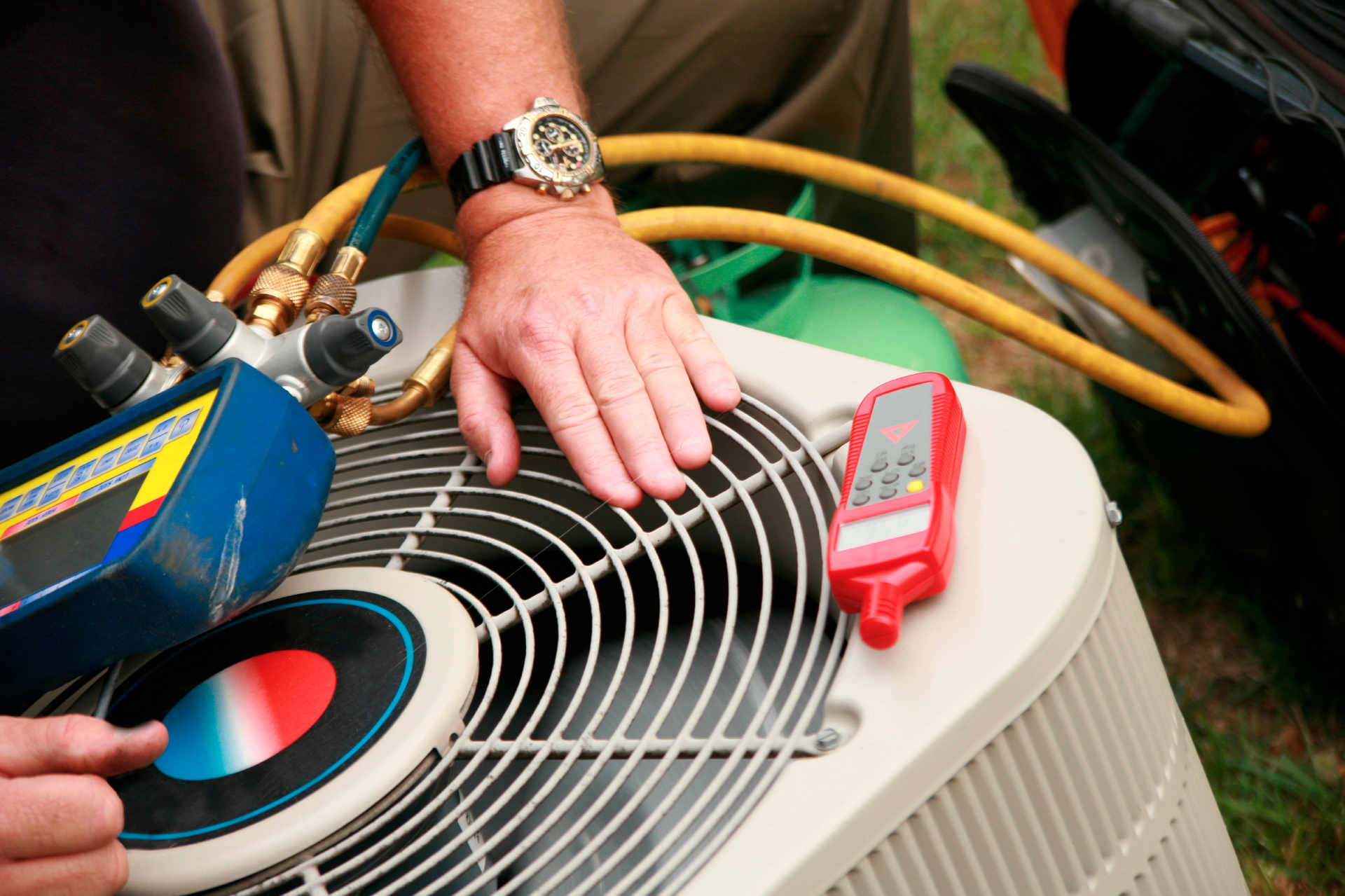
Regular maintenance is the single most effective way to extend the life of your HVAC system and keep repair bills down. Annual tune-ups that include coil cleaning, refrigerant checks, capacitor and contact inspection, and airflow measurement catch small issues before they become expensive repairs. Filter replacement every 30 to 90 days depending on the filter type and home conditions prevents coil icing and fan motor overwork.
A short list of maintenance priorities to discuss with your technician
- replace or clean filters regularly and use a filter rated MERV 8 or higher if the system supports it schedule professional tune-ups once per year, timed before the peak cooling season keep outdoor condenser units free of debris and allow two feet of clearance for airflow
These steps reduce surprise failures and help keep your system operating at the efficiency specified on its nameplate.
Balancing emotion and dollars when comfort matters
Decisions about repair or replacement often carry emotional weight. If you value uninterrupted comfort during the hottest months, paying more now for a reliable new system and a good warranty may be worth it even if the immediate math favors a repair. Conversely, if your budget is tight and the system is still serviceable, an honest repair that restores good operation can be the responsible choice.
Edge cases and special considerations
Historic or custom homes: Older homes with nonstandard ductwork or unique architecture may require customized solutions. In some cases, ductless mini split systems offer targeted cooling without a full duct overhaul.
Partial replacements: Replacing only the outdoor condenser or indoor air handler is sometimes recommended, but mismatched equipment can create efficiency losses and premature wear. If a component is more than eight years different in age or technology, replacing both usually gives better long-term performance.
R-22 refrigerant systems: Systems that use R-22 refrigerant are increasingly costly to service because the refrigerant is phased out. If your system needs a significant refrigerant repair and still uses R-22, replacement is typically the more economical path.
Hiring the right HVAC contractor
Credentials matter. Choose a licensed HVAC contractor, verify insurance, and ask for references from Tucson homeowners. A good contractor will explain the options, perform a load calculation for installations, and provide clear warranty coverage. When you search HVAC repair or HVAC contractor online, look for verified reviews that reference follow-through on estimates and quality after-installation support.
Final persuasion: think horizon, not just the next bill
Repair decisions often focus on the immediate expense. Replacement forces you to think over a longer horizon. In Tucson, where cooling drives household energy use and system stress, a new, correctly sized, and professionally installed unit will provide greater reliability, better humidity control, and energy savings that compound each summer. If your current system is old, unreliable, or expensive to repair, choosing replacement now can be the most practical way to protect your home and family during Tucson heat.
If you want a site visit, ask a technician to show you measured data for temperatures, refrigerant pressures, and airflow rather than relying solely on visual inspections. Concrete numbers make the decision less emotional and help identify what repair will actually restore. Whether you choose AC Repair in Tucson or a full AC installation in Tucson, insist on a written estimate, clear warranties, and a timeline that minimizes downtime during the hottest weeks. Local companies, including Plunkett Home Services, can help translate these technical realities into a plan that balances comfort, cost, and long-term value.

Plunkett Home Services
3144 E Fort Lowell Rd, Tucson, AZ 85716, United States
+1 (520) 808-2743
[email protected]
https://callplunkett.com/